
What's Wrong with Facilitated Communication?
Yes, many people with autism have abilities exceeding what we might presume. But given the massive risks of FC, it's our moral duty to demand proof of effective methodology and independent authorship.

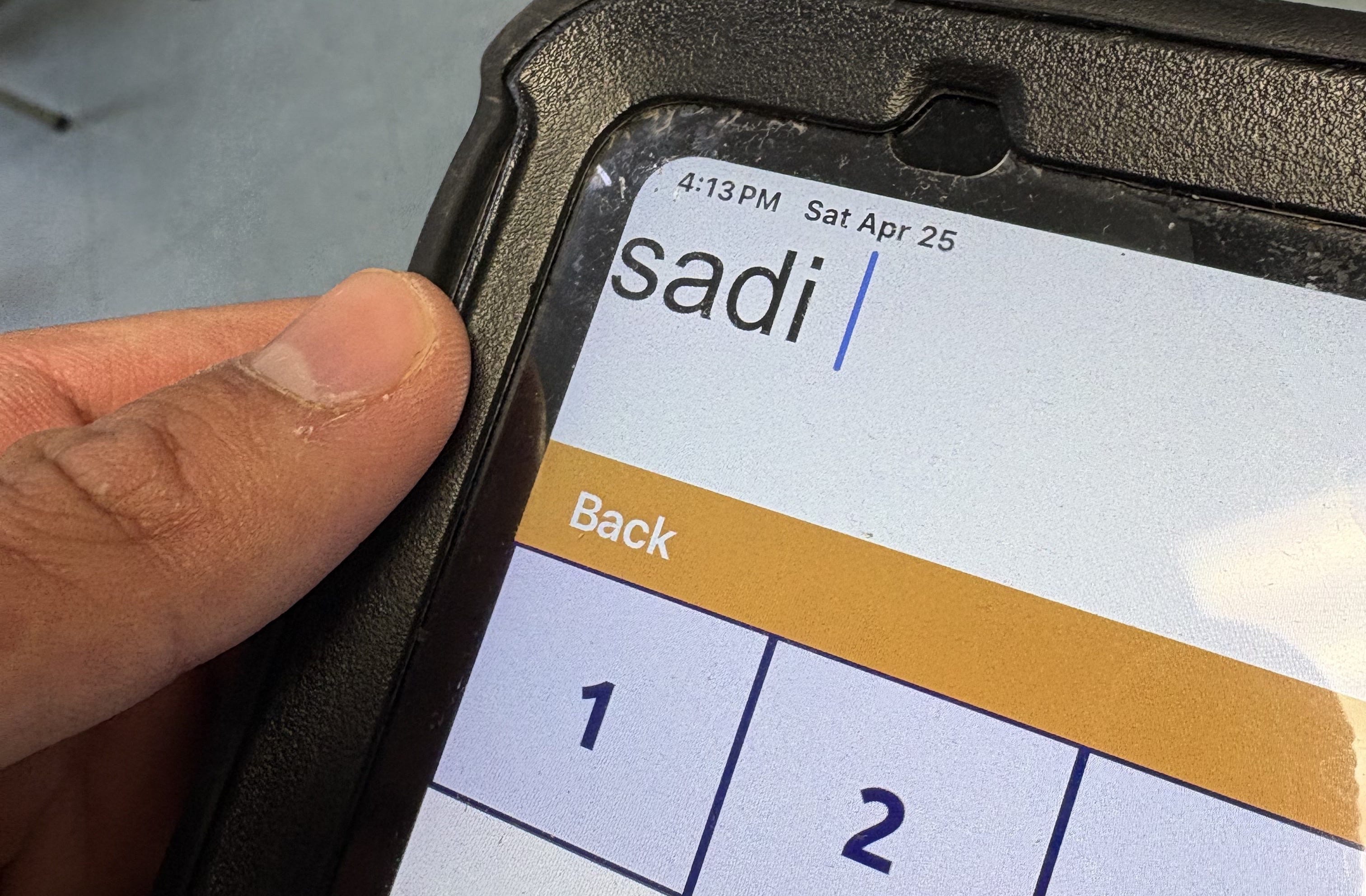
Whenever he sees me, my nonverbal friend who I’ll call Larry rushes towards me with his iPad to spell out a string of thoughts. At a party last weekend he quizzically spelled out “Toni” because he’s wondering if Tony is coming, then “Carl” and “Annalee,” wondering about them too. He then spelled “Sadi,” referring to my friend Sadie who had attended this party the year before (Larry has an incredible memory, and it’s worth noting that he does not have autism in the conventional sense, his disability is more akin to an early life brain injury). He does all his spelling entirely independently.
And he’s not the only one. I have several friends with ASD who I consider only very modestly verbal who regularly send me messages and texts completely on their own. While most of these friends, all young adults, send messages about relatively simple topics, like the cheese sandwich eaten at lunch or excitement about an upcoming family trip to Vegas, one rather taciturn but semi-capable young man posted a note waxing shockingly poetic about a beloved sibling.
People with ASD surprise me all the time. I have several autistic friends who possess astonishing talents in the arts, particularly music. One notable example is the great Alice Jen, a local prodigy who clearly meets the definition of profound autism but who can pound out a complicated Liszt Hungarian Rhapsody without a flaw. My great friend Ronnie, who is like a son to me, may be too autistic to add 5 + 17 but has memorized whole chunks of Disney and Pixar films. My friend Arnie barely utters any words but can assemble a 1000-piece jigsaw puzzle in a flash.
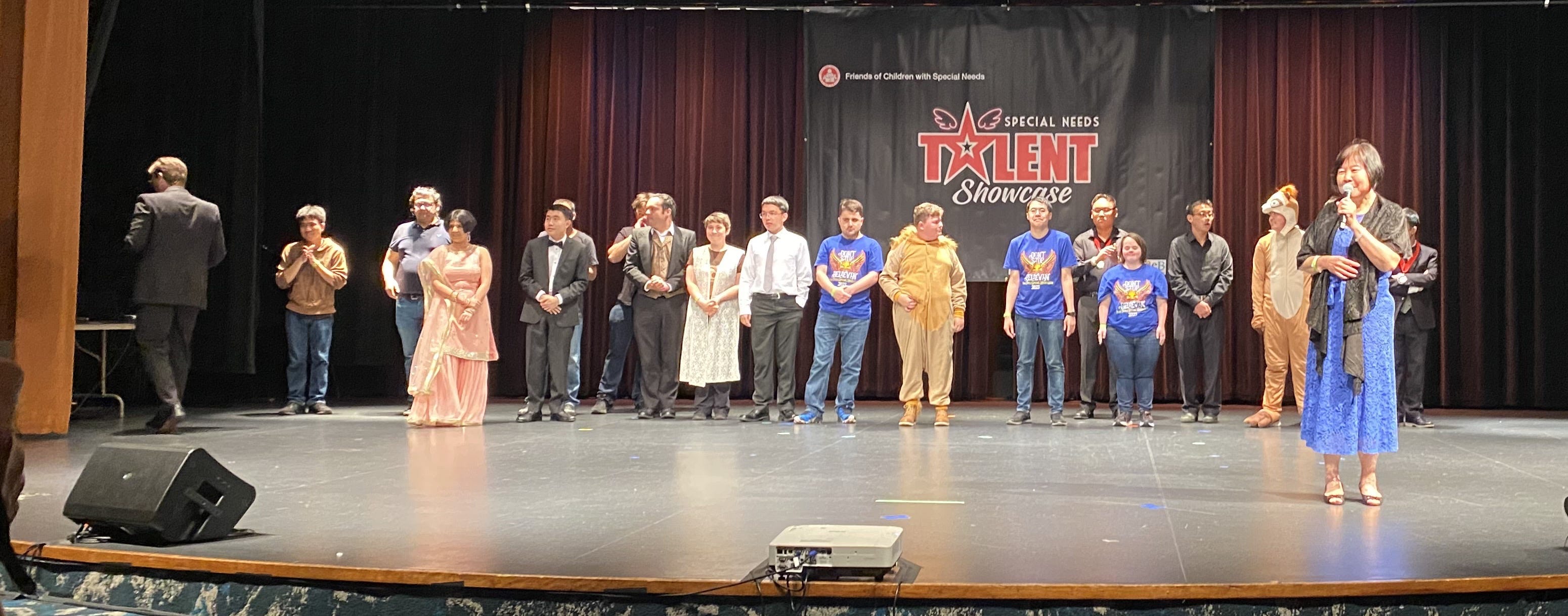
Some of the Special Needs Talent Showcase winners being introduced by the great Anna Wang, co-founder of Friends of Children with Special Needs, April 2023, at the Santa Clara Convention Center.
Every year since its inception I have been a lead sponsor of the Special Needs Talent Showcase, which platforms talents of many young people with intellectual and developmental disabilities of varying types. I absolutely love supporting an event that inspires both kids and parents to try new things and tap into undiscovered talents. I have also produced dozens of local concerts featuring musicians (piano, violin, drums, voice, Chinese dulcimer, marimba, saxophone, guitar, bass, you name it) with autism. And speaking of talent let’s not forget my own daughter, Princess Sophie, who may suffer from profound nonverbal autism but is an absolute tiger on the ski slopes.
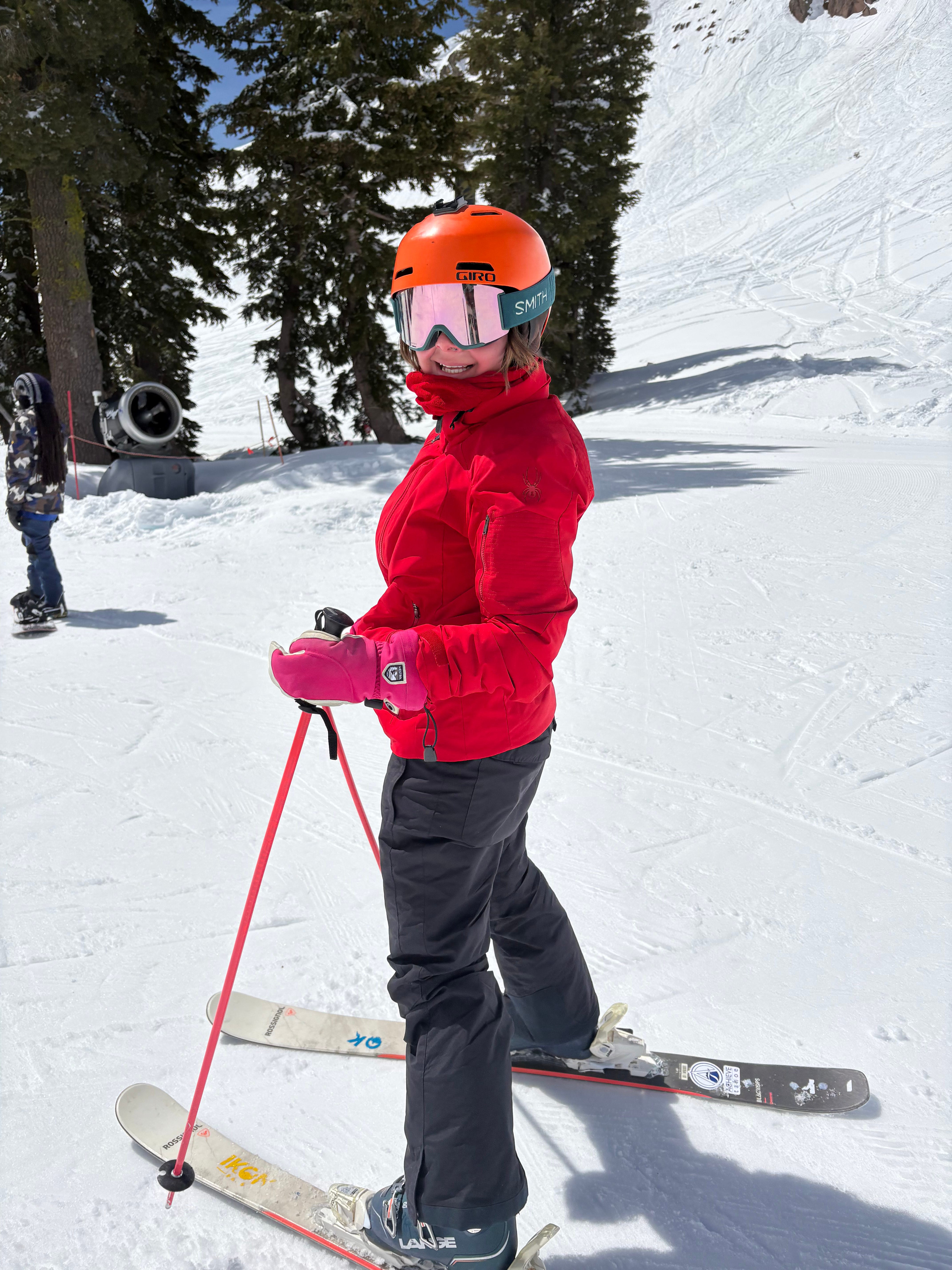
Princess Sophie preparing to shred on a bluebird day at Palisades Tahoe, April 2026.
So given my uber-appreciation for the whole gamut of autism capabilities, you might ask why I, of all people, express such strong skepticism about a method based on “presuming competence” — facilitated communication, or FC. It’s a method that and rests on a notion that autism is basically a motor disorder, or apraxia, preventing output of intact internal cognition. All that’s needed is a “communication partner” to train the nonverbal client and then facilitate pointing or typing of the client’s words.
The central problems with FC were explained quite nicely a few days ago by my friend Dr. Amy Lutz in a New York Times op-ed critical of the practice. Amy is a U. Penn historian of science and also VP of National Council on Severe Autism where I serve as president, who has researched and written extensively on this topic. The FC fanbase, mainly parents who use FC with their children and adult children, went bananas, but all the uproar notwithstanding, Amy’s points were extremely reasonable, and very necessary.
Like me, Amy isn’t questioning people who are typing or spelling without assistance of an intermediary. She would have no problem recognizing that my friend Larry is spelling “Sadi” on his iPad all by himself. In fact, Amy’s son Jonah, can also spell many words on his own, mainly about Sesame Street. Rather, she defines FC as “an intervention in which profoundly autistic individuals spell messages with the physical support of a nondisabled facilitator, who generally provides direct touch to the speller’s hand, wrist, elbow or shoulder.” Another method is for the facilitator to hold a letter board and issue any number of prompts while the client points with a finger or pencil. I firmly agree with Amy that we should all be concerned about these assisted methods.
Though not mentioned in the op-ed, the saga of Woody Brown, the purported author of a new novel, is a case in point. In a Today Show segment, Brown’s mother (herself a writer of fiction, coincidentally enough) “reads out” sentences ostensibly being spelled out by her profoundly autistic son. But as pointed out by several commentators, Woody was spelling out gibberish unrelated to his mother’s sophisticated narrative. This was classic FC —a facilitator-dependent communication that appears to flow from the non-disabled “communication partner” and not the disabled person himself. Has Woody ever been tested for the presence of truly independent authorship? Not to my knowledge.
Lutz points to these failings of FC:
Lack of empirical evidence. Studies have shown that in cases of severe nonverbal autism, FC output is influenced, however unconsciously, by the facilitator, and not truly independent. When tested by objective reviewers, spellers could not communicate information unknown to their facilitators. To date, there is not a single study published validating FC through basic testing methods. Might there be spellers out there whose facilitators do not influence output? Sure, anything is possible, but it is not reflected in the current research literature.
Risk for fraud. The risk for false statements or accusations is sky high — and to my mind, absolutely terrifying. As Amy’s op-ed points out, facilitated spellers have falsely accused their parents or caregivers of abuse, leading in some cases to innocent people being incarcerated and vulnerable children placed in foster care. It’s not hard to imagine what sort of false “consent” to sexual or financial activity my nonverbal Princess, if facilitated by a ne’er-do-well, could “spell out.” The very thought infuriates me, and I can’t imagine why every autism parent on the planet wouldn’t demand the most rigorous research imaginable in order to ensure facilitated communications are truly independent.
Diversion of resources. Amy brings up another point that deserves a ton of attention. When we spend public resources on an unproven method like FC — and believe me, it can be very costly and involve demands for full-time communication partners throughout the school year — we divert money and energies from more plausible methods and other critical needs like self-injury, seizures, and wandering. While parents are free to try whatever interventions they feel are appropriate using their own time and money, we should be suitably protective of taxpayer dollars to ensure they are not directed toward programs of dubious efficacy along while also opening the door to extravagant potential for fraud.
Substituted communication. Another pitfall mentioned by Amy is that FC deprives severely cognitively impaired individuals of the limited control they have over their own lives. Communication training must be calculated to elicit authentic thoughts and statements, without thrusting our own version of success on people with cognitive impairments.
Finally, despite the unhinged accusations against her on social media to the contrary, Dr. Lutz comes out strongly in favor of research, saying that enabling people with autism to “authentically and independently” communicate is “obviously a top research priority.”
Amy understands research and knows the difference between a hypothesis and a proven fact. When people say “I am not influencing my son’s output,” while assisting the spelling/pointing/typing in some way, they are stating a hypothesis, not a fact. Her extremely rational point is that such claims, especially given the long history of studies debunking the method, must be put to the test.
If parents and facilitators are so sure their nonverbal kids and adults are authentically communicating, they should be eager to participate in testing. This is Scientific Method 101, and standard practice with any intervention in autism, not just spelling. The Woody Brown debacle offers an example that personal testimony is merely a hypothesis, and not the same as proof.
Jill Escher is an autism research advocate and philanthropist, and is president of the board of National Council on Severe Autism. More at jillescher.com.
Spelling methods are the only methods I’ve seen that effectively address the motor issues, including impulsivity. I typically do not see AAC devices introduced in a way that prevents impulsive selections. This hinders the nonspeaker’s ability to select what they truly want to select. This is why families are seeing success with spelling when they haven’t seen that same progress with years of other methods taught through speech therapy and special education.
You said, "Another method is for the facilitator to hold a letter board and issue any number of prompts while the client points with a finger or pencil."
You did not differentiate between the types of prompts, nor did you mention that as the speller progresses in skill and accuracy, the prompts are faded. This is common in any type of coaching, and even in other autism therapies. A nonspeaker's communication is not considered to be self-authored until he/she can point to letters accurately with no one giving prompts that guide the speller to specific letters. It would have been beneficial if you had talked to practitioners about the difference between the aquisition phase and the autonomous phase.
During aquisition, the practitioner may give directional prompts to guide the speller to specific letters to answer questions with one known answer. This is how the practitioner helps the speller develop the neural pathways to accurately and consistently point to the desired letters. It's no different than a golf coach helping a beginning golfer with club choice, grip, and swing.
After a speller becomes accurate and consistent at pointing to desired letters, the practitioner can ask questions without knowing how the speller will respond. At this stage, the only prompts provided are eye prompts like "look at the board, move your eyes" or continuation prompts like "find your next letter, keep going". And beyond that, a practitioner might offer encouragement, like "you've got this, trust yourself".